
Where Tourist Money Goes in Ontario: Beyond Hotels and Gas
The spending categories nobody puts in the brochure.
119.6 million visits to Ontario in 2025. Nine out of ten arrived by car. Hotels got their cut. Gas stations got theirs. Restaurants, attractions, provincial parks, all accounted for in the tourism statistics.
But a significant portion of tourist spending ends up somewhere the brochures don’t emphasize: entertainment that runs late into the evening. Casinos, both the physical kind you walk into and the digital kind that lives on your phone. Ontario legalized private online casinos in 2022. That changed where people spend their time when the hiking trail goes dark, and the museum has closed.
How Visitors Spend Money in Ontario
Tourism spending in Ontario breaks down into predictable categories: accommodation, transportation, food and beverage, recreation, and retail. The province tracks these numbers carefully. What the statistics reveal is that entertainment and recreation, including gaming, accounts for a larger share than most visitors anticipate.
“Tourism is one of Ontario’s largest industries, supporting over 400,000 jobs and generating more than $36 billion in economic activity annually.”
— Ontario Ministry of Tourism, Culture and Sport
The after-dark economy operates differently from daytime attractions. A family visiting Niagara Falls might spend $75 on Maid of the Mist tickets and $40 on lunch. That same family, or at least the adults, might spend $200 at a casino that evening without considering it “tourism spending” in the same category.
Hotels near major gaming venues charge higher rates than comparable properties elsewhere. Restaurants inside casinos run later hours. The economic ripple extends beyond the gaming floor itself.
Land-Based Casinos Across Ontario
Ontario operates a network of land-based casinos, from major destination resorts to smaller regional facilities. These aren’t hidden – they’re built into the tourism infrastructure of their respective regions.
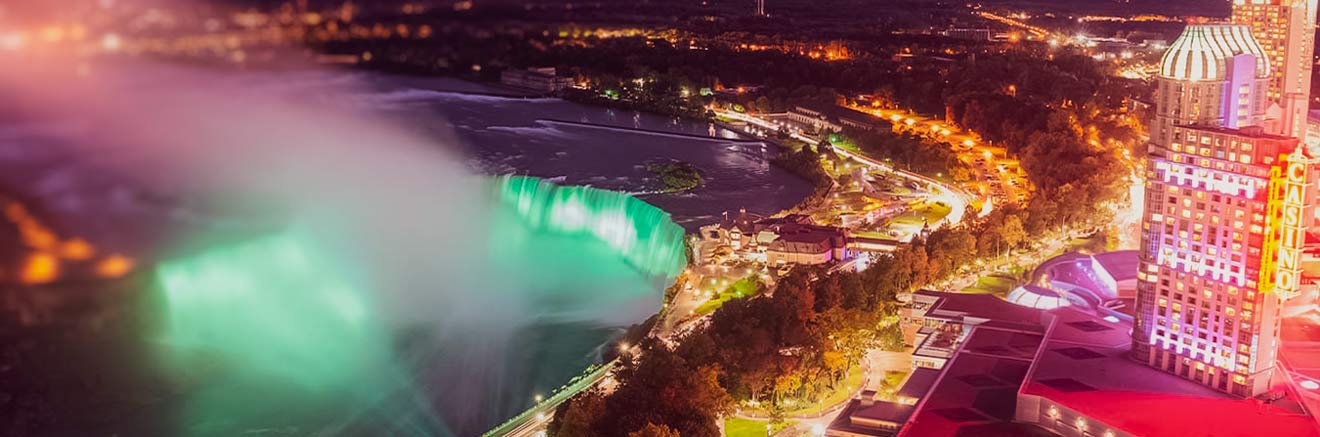
Niagara Falls: Two Casinos, One Block
The waterfall draws the crowd. The casinos keep them there after dark.
Two properties sit within walking distance of the falls. Casino Niagara – the older one on Clifton Hill, aimed at day-trippers who want to lose fifty dollars before dinner. Fallsview Casino Resort – the larger operation with over 3,000 slot machines, 130-plus table games, and a 1,500-seat theatre booking acts like Sting and Kevin Hart.
Fallsview alone draws roughly 7 million visitors annually. That exceeds Algonquin Provincial Park. It exceeds the CN Tower.
The carpet patterns are aggressive. The air smells like air conditioning. Some people attend shows and never touch a table. Others sit at slot machines for three hours and call it entertainment. Neither approach is wrong. A Friday night in Niagara – dinner, a show, two hours at blackjack – can hit $400 before leaving the parking garage. That’s not a complaint. That’s what the region runs on.
Casino Rama: The Remote Destination
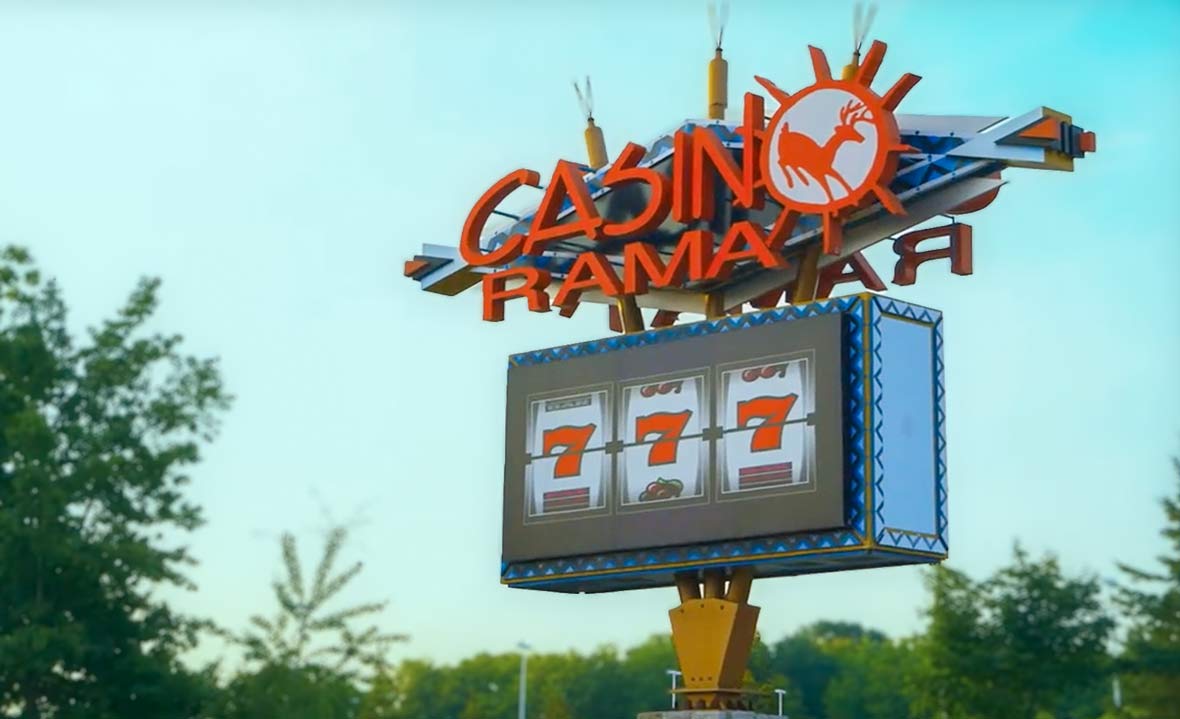
Ninety minutes north of Toronto, past Orillia, Casino Rama sits on Mnjikaning First Nation territory. Ontario’s only First Nations-owned casino – 2,500 slot machines, 100 table games, and a 5,000-seat entertainment centre.
The real draw isn’t gambling. It’s the concert venue. Major acts play there, and people drive from Barrie, Peterborough, and Toronto for the show. The casino happens to be attached.
Some visitors appreciate the remoteness. No distractions. No waterfalls. Just a hotel, a theatre, and a gaming floor. That’s a specific kind of appeal, the destination casino without the flight to Vegas.
Smaller Regional Casinos
Eastern Ontario and other regions operate smaller facilities:
Hard Rock Casino Ottawa – formerly Rideau Carleton Raceway. Slot machines, electronic table games, poker room. Useful if you’re already in the capital and Parliament Hill closed hours ago.
Shorelines Casino Belleville – serves the Prince Edward County crowd. Wine tours by day, slot machines by night.
Shorelines Peterborough – convenient if you’re camping nearby and the weather turns.
Online Casinos: What Changed in 2022
April 2022. Ontario opened a private, regulated online casino market – not government-run like some other Canadian provinces, but an open market with licensed private operators. BetMGM, FanDuel, DraftKings, PokerStars, and others applied for licences and received approval.
For visitors, this matters. You don’t need to drive to Niagara or Rama. You need a hotel room with Wi-Fi and a device that verifies your location, because the apps check. You must be physically inside Ontario to play. Cross into Quebec or New York, and the app locks.
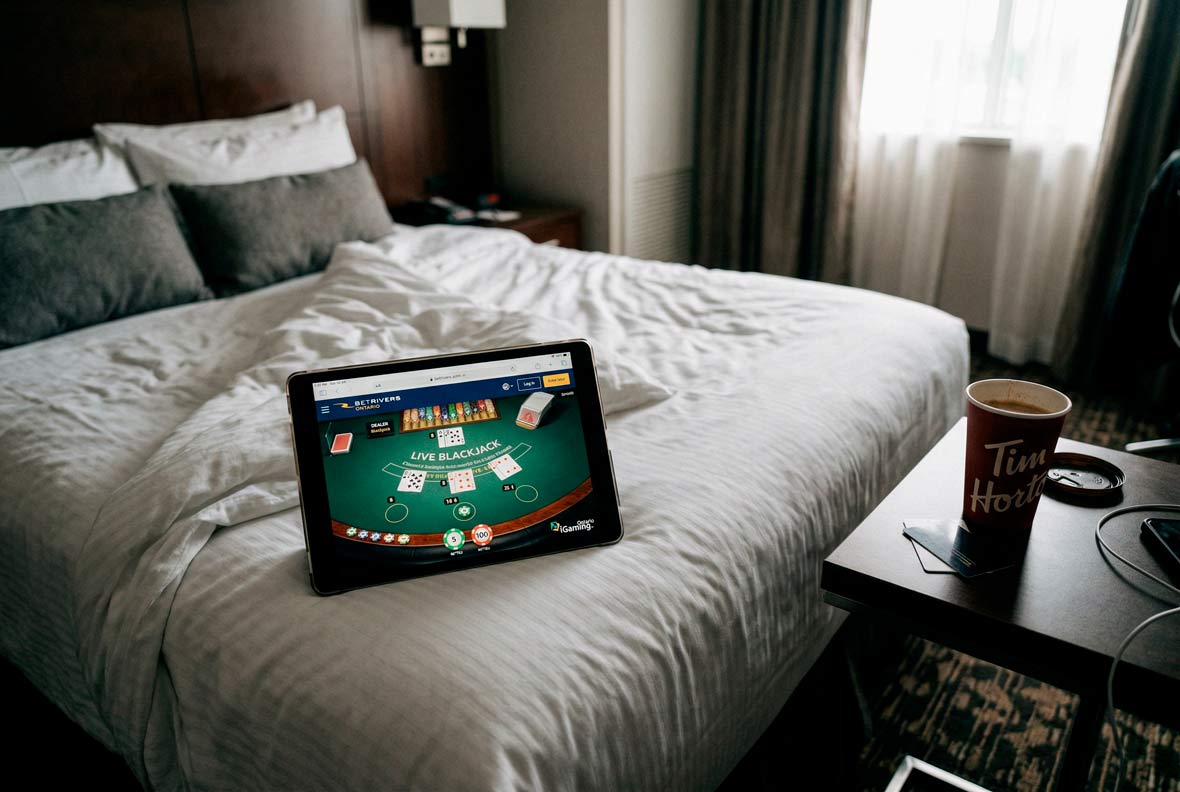
Twenty to thirty licensed operators currently compete for attention. Each offers the same basic menu: slots, blackjack, roulette, live dealer games. The live dealer format is genuinely odd – a real person in a studio dealing cards to a camera while you sit on a hotel bed.
The province says it’s regulated. Games are tested. Odds are published. None of that changes the house edge. You’ll lose, on average, about as fast as in a physical casino. The difference is convenience.
One thing apps do that physical casinos don’t: they allow hard deposit limits. Set $50, lose it, you’re done. That’s actually harder to enforce on yourself in person.
The growth surprised everyone. When Ontario opened the market in 2022, the government estimated $100 million in annual provincial revenue. By 2024, actual revenue exceeded $1.5 billion – fifteen times the projection. The government hasn’t explained the gap. The most likely factor: rapid migration from unregulated offshore sites to licensed Ontario platforms.
What People Actually Spend
A realistic weekend, based on tourism surveys and casino annual reports:
Friday: Hotel near Clifton Hill – $220 after taxes (13% HST plus municipal accommodation tax). Dinner for two – $90. Casino Niagara – $100 budget for slots. Two hours. All of it lost. That’s normal.
Saturday: Breakfast $30. Maid of the Mist $75 for two. Lunch $40. Evening show at Fallsview – $150 for two tickets. Late snack $25.
Sunday: Rain. Instead of driving home immediately, an hour on an online casino app from the hotel lobby. Deposit $50. Play blackjack. Cash out $32 – down $18. Drive home.
Total entertainment spends (gaming plus show): $300. About a third of their trip budget. The rest went to hotels, gas, and food.
That’s not an outlier. That’s a typical long weekend for a certain kind of visitor. The kind who doesn’t discuss it at work Monday morning.
The Broader Picture
Casino spending represents one slice of Ontario’s tourism economy. For many visitors, it’s irrelevant – they came for parks, museums, or family. For others, it’s a significant part of why they chose certain destinations.
What the numbers show is that after-dark entertainment draws money that doesn’t appear in daytime attraction statistics. Some of it ends up in lakeside motels and gas stations. Some disappears under neon lights on a casino floor. Some vanishes into a phone screen at 11 PM in a Holiday Inn.
All of it is legal. All of it is real. And pretending otherwise would make any honest tourism overview incomplete.
For camping options across the province, see our camping and outdoors page. For regional information, including Eastern Ontario destinations near Ottawa casinos, see our Thousand Islands coverage.
📌 Official Resources
- AGCO (Alcohol and Gaming Commission of Ontario) – agco.ca
Licensing, regulations, and operator information. - iGaming Ontario – igamingontario.ca
Online gaming market oversight and operator list. - ConnexOntario – 1-866-531-2600
Problem gambling support, 24/7, confidential. - Destination Ontario – destinationontario.com
Provincial tourism information.