
Accommodation Options in Ontario
Where to stay, and what to expect when you get there.
Ontario offers more lodging variety than most visitors expect. The province accounts for roughly 30% of Canada’s accommodation industry revenue, over $10 billion annually, spread across thousands of properties ranging from downtown high-rises to lakeside cabins accessible only by boat.
What you book depends on where you’re going and why. Business travellers in Toronto face different choices than families heading to Muskoka or anglers bound for Northwestern Ontario. On this page, we cover the main categories, their typical characteristics, and what to consider before booking.
Hotels and Motels
Ontario distinguishes between several property types, though the lines blur in practice.
| Type | Location | Access | Features |
|---|---|---|---|
| Hotel | City centres, airports | Interior corridors | Lobby, restaurant, services |
| Motor hotel | Highway interchanges | Interior corridors | Parking, restaurant |
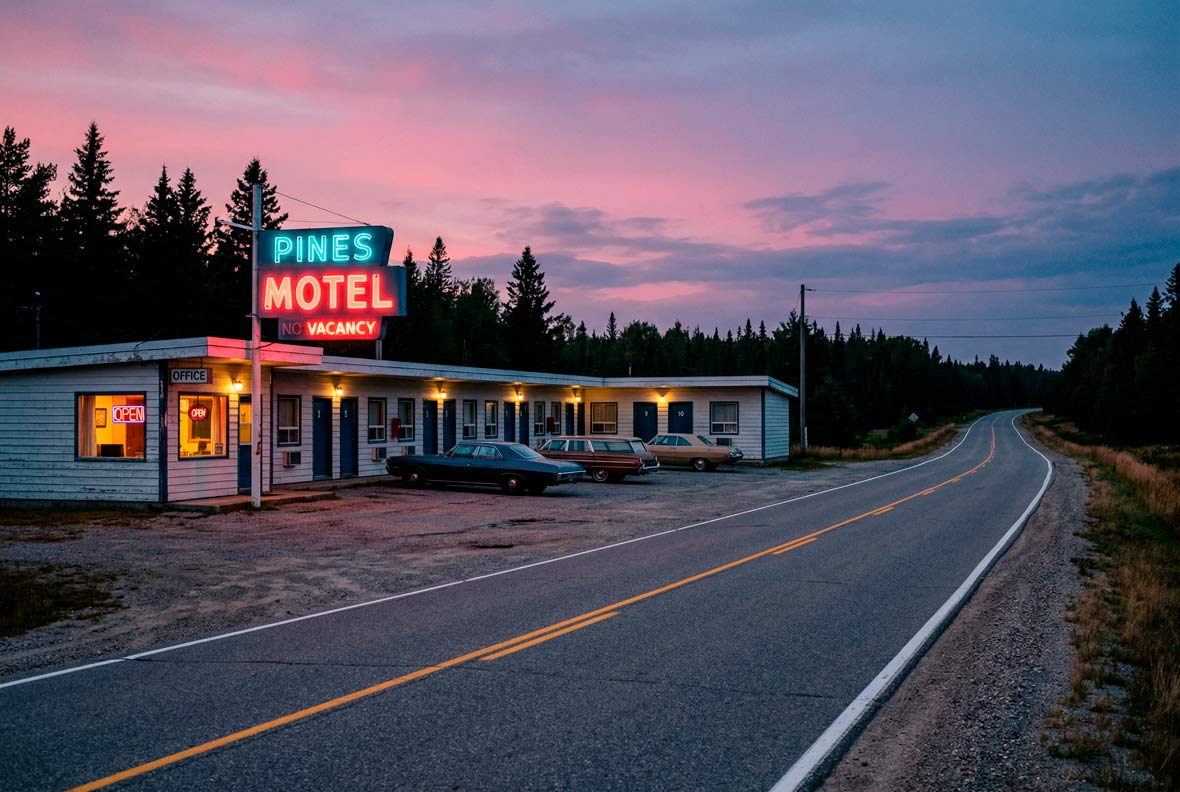
| Motel | Highways, small towns | Exterior doors | Parking at door, basic amenities |
Hotels dominate urban markets. Toronto, Ottawa, and other cities offer the expected range from budget chains to luxury properties. Downtown Toronto rooms averaged over $320 per night in early 2025, among the highest rates in Canada. Airport hotels typically cost less while offering proximity to terminals.
Motels remain common along Ontario’s highways, particularly in Northern Ontario where distances between communities stretch for hours. These one- or two-storey properties with exterior room access provide basic accommodation at lower rates than full-service hotels. Many date from the mid-twentieth century highway expansion, and quality varies considerably.
Motor hotels split the difference – multi-storey buildings with interior corridors, often located at highway interchanges. They typically include on-site restaurants and more amenities than traditional motels.
Resorts and Lodges
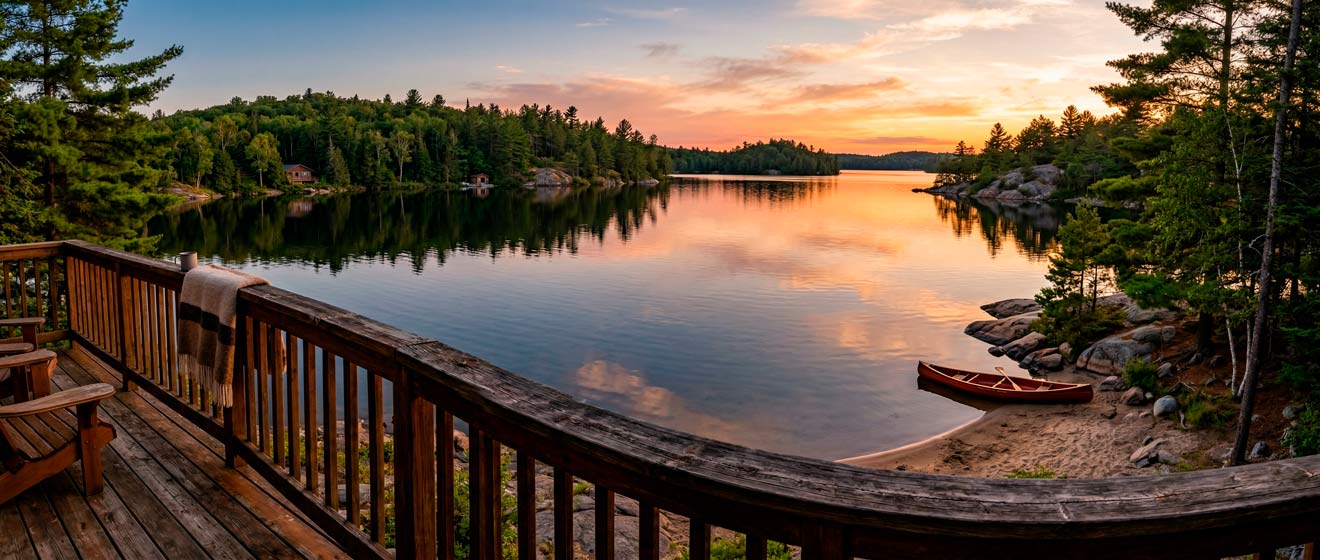
Ontario’s resort tradition dates back to the late nineteenth century, when railways first brought visitors to Muskoka and the Kawarthas. The format has evolved, but the appeal remains: properties where accommodation and activities combine into a single experience.
Cottage resorts cluster around Ontario’s lake country. Muskoka alone contains dozens of properties on lakes like Rosseau, Joseph, and Lake of Bays. These range from rustic housekeeping cottages, where guests bring their own food and make their own beds, to full-service resorts with dining rooms, supervised children’s programs, and equipment rentals. Rates vary accordingly, from a few hundred dollars per night for a basic cabin to several thousand for lakefront luxury.
Fishing lodges serve a different market. Northwestern Ontario and the near-north contain hundreds of these properties, many accessible only by float plane or boat. Guests come for walleye, pike, muskie, and lake trout. Packages typically include accommodation, meals, boats, and guides. The season runs from ice-out in May through fall freeze-up.
Ski resorts operate seasonally in the Muskokas, Collingwood area, and Ottawa Valley. Most offer slope-side accommodation during winter months, with some transitioning to golf or hiking packages in summer.
Bed and Breakfasts
Ontario has approximately 2,471 registered bed and breakfast establishments across the province. Bed and breakfast accommodations range from heritage homes in small towns to working farms offering rural experiences.
B&Bs appeal to travellers who prefer personal service over anonymity. Hosts often provide local knowledge that guidebooks miss. The tradeoff: fewer amenities, shared common spaces, and less flexibility in arrival and departure times than hotels offer.
Niagara-on-the-Lake, Prince Edward County, and Stratford contain notable B&B concentrations, largely serving visitors to vineyards, theatre, and culinary destinations.
Alternative Accommodations in Ontario
Beyond traditional lodging, Ontario offers several other options.
Cottage rentals provide private accommodations in Ontario’s lake country. Unlike resort stays, cottage rentals involve booking an entire property – typically by the week during peak summer season. Cottage resorts cluster around lakes in Muskoka, Haliburton, and the Kawarthas. Many operate seasonally from May through Thanksgiving. Along major highways, motels remain a practical option for travelers who need only a clean room and a parking spot, particularly useful when driving between regions or arriving late.
Provincial park cabins offer roofed accommodation in parks that otherwise cater to campers. Yurts, cabins, and rustic shelters provide shelter without requiring camping gear. These book quickly, often within minutes of reservation windows opening.
Farm stays and agritourism properties have grown in number, particularly near urban centres. These range from working farms offering rooms to rural estates with event facilities.
Hostels exist primarily in Toronto and Ottawa, serving budget travellers and backpackers with dormitory-style accommodation.
Booking Considerations for Visitors
- Seasonality matters. Summer rates in cottage country can exceed winter rates by multiples. Conversely, ski destinations charge premiums from December through March. Shoulder seasons (May, June, September, October) often combine lower rates with good weather.
- Location affects price. Downtown Toronto commands the highest hotel rates in the province. Properties near airports, in suburban areas, or in smaller cities typically cost less for comparable quality.
- Taxes add up. Ontario’s 13% HST applies to all accommodation. Toronto adds a municipal accommodation tax (currently 8.5%), bringing total taxes to over 21% of the room rate. Some other municipalities charge 4% municipal taxes. Budget accordingly. For details on HST and municipal accommodation taxes, see our visitor tax information page.
- Cancellation policies vary. Properties in high-demand areas during peak season often require deposits and impose strict cancellation deadlines. Read terms before booking.
- Not all ratings are equal. Canada has no mandatory hotel classification system. Star ratings you see online typically come from the booking platforms themselves, not from independent inspection. The Ontario Restaurant Hotel & Motel Association offers voluntary quality assurance programs, but participation is not universal.
📌 Official Resources
- Destination Ontario – destinationontario.com
Provincial tourism organization with regional guides and accommodation information. - Ontario Restaurant Hotel & Motel Association – orhma.com
Industry association representing accommodation providers across the province. - CottagesInCanada – cottagesincanada.com
Listings of 2,900+ private cottage rentals by owner across Ontario regions. - BBCanada – bbcanada.com/ontario
National directory of B&B establishments with Ontario listings.