
Ontario: 250,000 Lakes and the Roads Between Them
Travel notes from people who actually drive here.
119.6M
visits to Ontario in 2024
90%
of them by car
Statistics Canada released that number in September 2025. Almost 120 million visits to Ontario in a single year. And nine out of ten happened by car – not plane, not train. People drove here. They chose the scenic routes, the back roads, the highways that cut through forest and farmland.
That statistic is why Real Ontario exists. A few of us locals, transplants, people who spend weekends chasing gravel roads into cottage country, had been collecting notes for years. The pie shop is worth stopping for on Highway 7. The conservation area that somehow stays empty in August. The beach on Prince Edward County, where fossils wash up after storms. We figured it was time to put those notes somewhere useful.
We are not a tourism board. We are people who live here, or visit often enough that it feels like living here. This site is what we wish had existed when we first started exploring the province.
Ontario by the Numbers
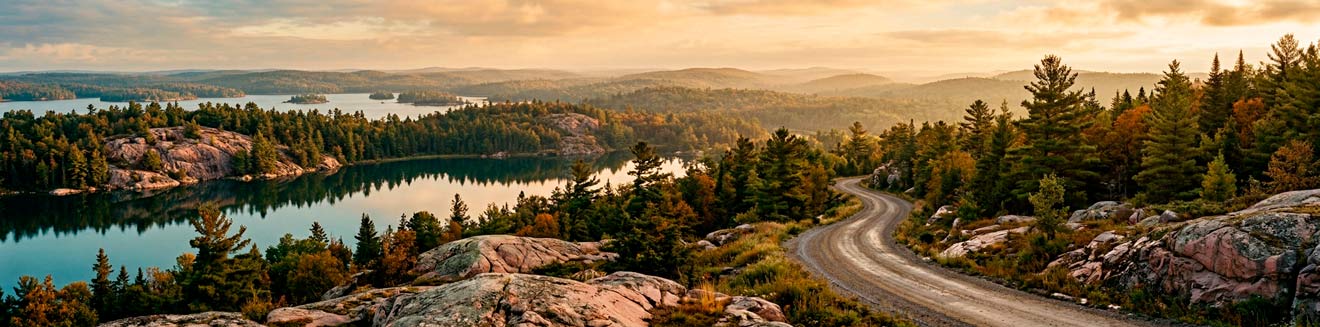
The name comes from Iroquoian Ontarí’io, meaning beautiful water or sparkling lake. Over 250,000 lakes spread across a landmass the size of France and Spain combined. That is not a typo. A quarter million bodies of water, from the Great Lakes down to ponds you will never find on any map.
Ontario holds roughly 20% of the world’s fresh surface water. The Boreal Forest covers half the province – larger than the Amazon. Wasaga Beach stretches 14 kilometres, the longest freshwater beach on Earth. Manitoulin Island is the largest freshwater island anywhere.
— Ontario Nature
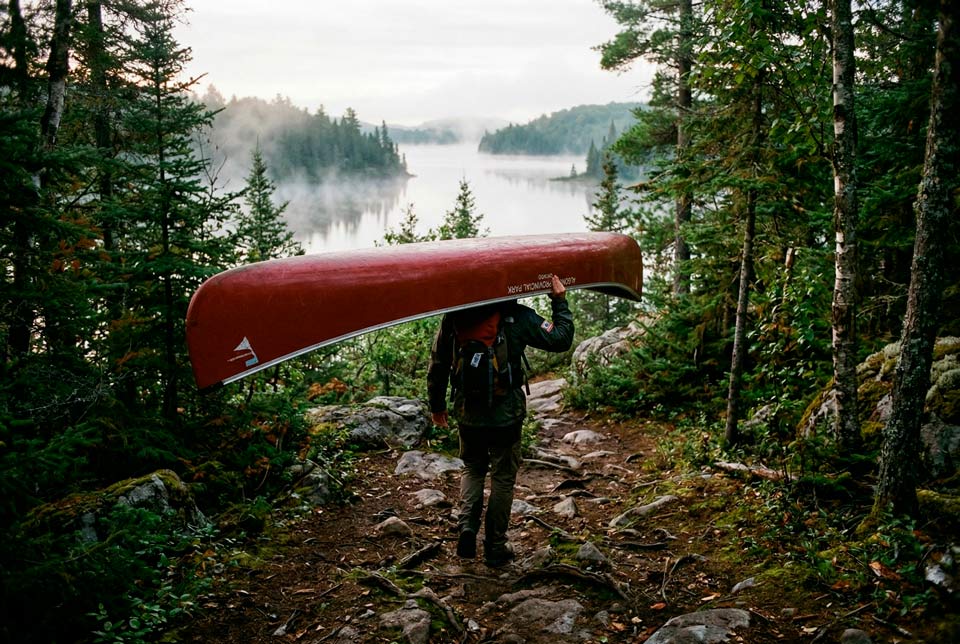
Those facts sound like tourism board copy. They are not. Paddle into Algonquin Provincial Park – established in 1893, Ontario’s first – and the numbers stop being abstract. The lakes connect through portage routes. You carry your canoe between watersheds. You can spend weeks out there without seeing pavement or hearing an engine. The wildlife is real: moose at dawn, loons calling across the water at dusk, black bears occasionally raiding poorly hung food bags.
There are 330 provincial parks across the system now. More than a hundred are open to visitors, ranging from beaches to backcountry to waterway routes that wind for days. Camping options range from drive-in sites with electrical hookups to backcountry portage routes where you won’t see another person for days. The province keeps adding protected land: in 2025, thousands of hectares were added to parks like Chapleau-Nemegosenda and MacGregor Point.
The Places Worth Driving To
28.2M
visitors to Toronto in 2025
$9.1B
spent in the city
Toronto draws the headlines. Destination Toronto reported a record year in 2025 – 28.2 million visitors, $9.1 billion in spending. The FIFA World Cup matches scheduled for 2026 will push those numbers higher still. The city offers world-class museums, a food scene that rivals anywhere in North America, and neighbourhoods that each feel like different cities.
But the real Ontario story happens outside the city. Four out of five domestic visits concentrate in the Greater Toronto Area and eight nearby tourism regions: Niagara Falls and wine country, Muskoka, Georgian Bay, Prince Edward County. The Thousand Islands and Eastern Ontario draw a different crowd: slower pace, river views, historic towns like Kingston and Gananoque. All sit within a day’s drive of each other. This is car country. That is not a criticism. That is the geography.
2.1M
annual visitors to Muskoka – 1,600 lakes in a region the size of a small European country.
National Geographic calls Muskoka a place where “connecting to stillness reveals vitality.” Locals call it cottage country. Both descriptions are accurate. Two hours north of Toronto, the landscape shifts from farmland to Canadian Shield – granite outcrops, pine forests, lakes everywhere. The RMS Segwun, launched 1887, still running cruises out of Gravenhurst, is the oldest operating steamship in North America. You can ride it the same way Victorian tourists did, minus the formal dress code.
Prince Edward County sits southeast of Toronto, connected to the mainland by a single isthmus near Trenton. Sandbanks Provincial Park has beaches backed by dunes that glaciers deposited 12,500 years ago. The limestone between the shoreline and Lakeshore Beach holds 450-million-year-old fossils. You can find them if you know where to look – trilobites, ancient shells, traces of creatures from when this land was seafloor.
Pick Your Season
Ontario is a four-season destination, and each season offers something different. The trick is knowing what you are signing up for.
| ☀️ Summer | Peak crowds. Park reservations crash on opening day. But the lakes are warm and the days are long. |
| 🍂 Fall | The postcard version. Sugar maples ignite. Algonquin runs colour reports. Crowds thin. |
| ❄️ Winter | Ice volcanoes form on Lake Ontario shores. Forest skating trails at Arrowhead and Sleeping Giant. |
| 🌸 Spring | Maple syrup season. Waterfalls at full force. Muddy trails, lower prices, fewer people. |
How to Get Here, and Why You’ll Need a Car
Toronto Pearson International Airport handles most arrivals from outside Canada. Ottawa’s airport works for the capital region, the Rideau corridor, and the Thousand Islands. Billy Bishop Airport on the Toronto Islands serves domestic routes and some US destinations – it is closer to downtown but smaller.
VIA Rail connects the major cities. The Toronto-Ottawa-Montreal corridor runs multiple times daily. Kingston makes a good overnight stop if you want to break up the journey – Tripadvisor forums call it “an attractive, charming, historical small city” worth more than a pass-through.
But that 90% statistic tells the real story. Algonquin, Killarney, Lake Superior Provincial Park, the cottage roads of Muskoka – no public transit reaches them. The back roads wind past lakes that do not appear on Google Maps. If you want to see Ontario beyond the cities, rent a car. Trust us on this one. Finding accommodations along the way is straightforward: motels dot the highways, and most towns have at least one or two options.
About This Site
We update Real Ontario as we travel. Conservation area reviews come from visits, not press releases. Airport pages link to official sources. We do not guess at schedules or make up terminal maps. When we write about a region, we have driven through it. Usually more than once. Usually with at least one wrong turn that became a detour worth taking.
This is not the official tourism site. Destination Ontario handles that. The Ministry of Tourism, Culture and Gaming publishes the statistics. Parks Canada and Ontario Parks manage the protected lands. Conservation Ontario coordinates the conservation authorities.
What we add is a layer of personal experience. The kind of detail that does not fit into government reports. The places that get overlooked in favour of the famous ones. The quiet spots.
The 330 provincial parks keep expanding. The steamship in Gravenhurst still runs its routes every summer. The lakes are still there – all 250,000 of them. And somewhere out there, another 119 million visits are happening. We’ll be on one of those roads. You’re welcome to join us.
📌 Official Resources
- Destination Ontario – destinationontario.com
- Ontario Parks – ontarioparks.com
- Parks Canada – parks.canada.ca
- Conservation Ontario – conservationontario.ca